The Bluetit
1 Bird clothes

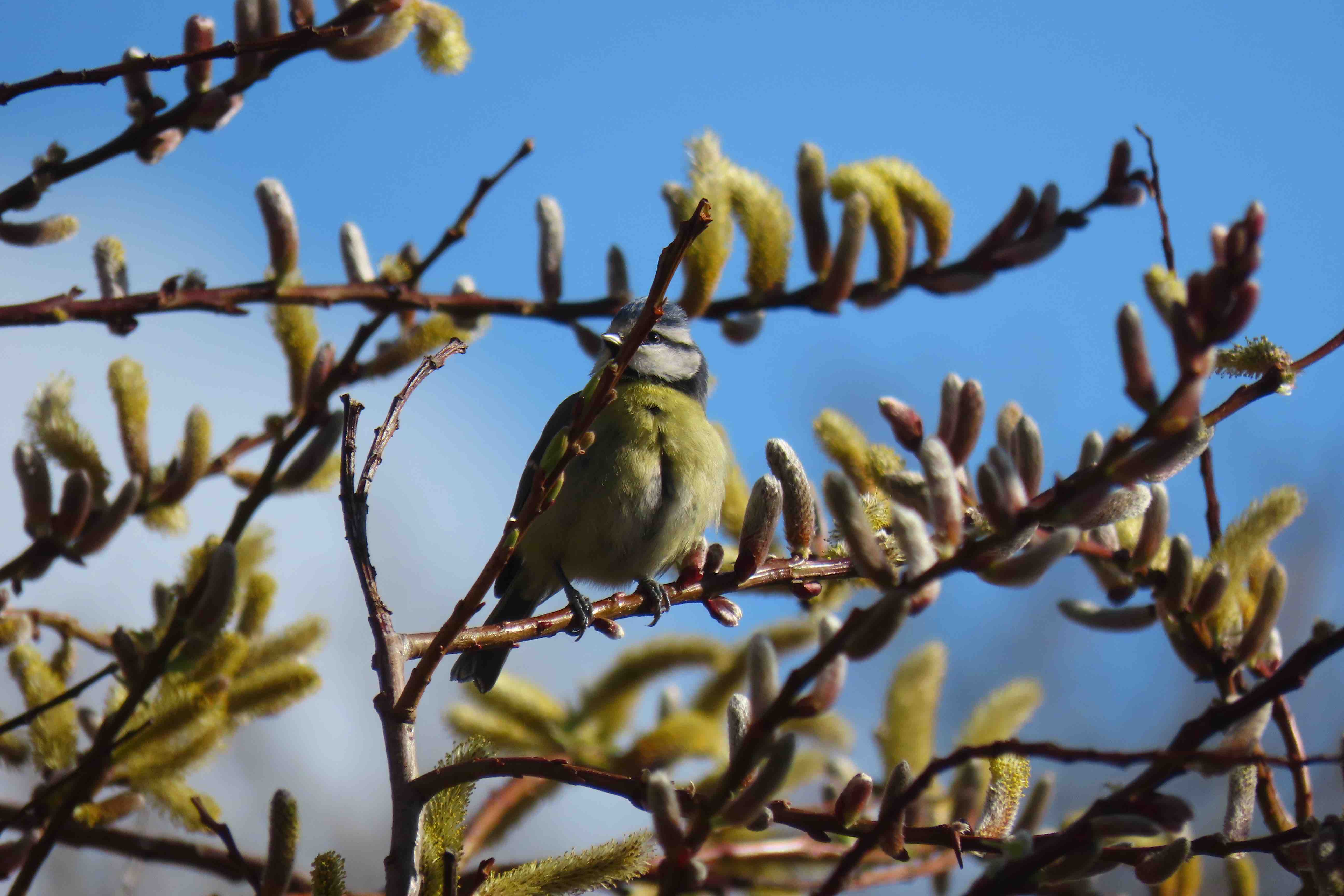
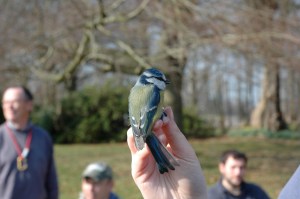
Some male and female birds look the same – except the female’s smaller than the other, including wing feathers. With blue tits, it’s hard to tell the difference unless you hold a bird in your hands, like in this picture. This is bird ringing.
2 Bird gear
If you look at birds, each have a different way of eating, perching and flying.
Check out the beak on the blue tit – it’s thin and sharp, great for picking out wee flies and grubs from tree branches.
Play this game: https://www.rspb.org.uk/fun-and-learning/for-kids/games-and-activities/online-games-for-kids/hungry-birds/
A blue tit’s claws can land on narrow surfaces like twigs and the edge of nestboxes. It’s quite an acrobat and likes to hang upside down 🙂
A blue tit flies with very fast wing beats and can swerve and dive well – it has to look out for the ‘heavy mob’ – the birds that might like it for breakfast, like this sparrowhawk: https://www.youtube.com/watch?v=Ra6I6svXQPg
3 Bird song
Birds sing for different reasons, but often it is to say, ‘Keep out!’ or “This is my girl! Back off!’ Every bird has a different song and most birds have calls as well – some are alarm calls.
A blue tit has a few distinctive calls, but not much of a song.
Here’s a link to let you hear: https://www.youtube.com/watch?v=kv4jwG3h5yw
Bird ringing information
This is an amazing science which allows us to monitor bird movements across the world. This is important information as bird numbers and habits change if their habitat and food chain is disturbed – so the data gathered can help us understand more about the effects of climate change and other things.

People put up mist nets to catch the birds. They are then weighed, measured and their sex noted.
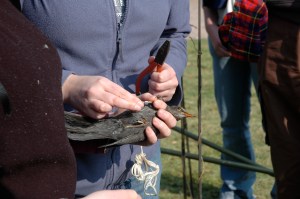
A wee ring’s placed on a leg. It has a number which when logged, will contain all the gathered information and is then available internationally, so that if that bird is caught again in a different area or country, the information from the ring can be read. This helps define a better picture of how birds move, especially during autumn or spring – which is known as migration. If this interest you, look at this link: https://grampianringing.blogspot.com/
Here is a wee tale about some baby blue tits:
The Fledglings
Great tit
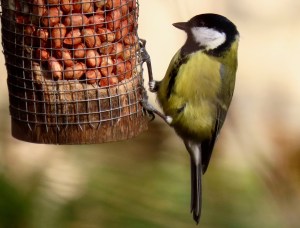
It is the same family as the blue tit. If you compare the two, there are quite a few differences in the colour of their feathers.
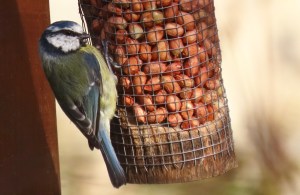
Challenge – can you make a table like this to show their differences?
| Bird name | Blue tit | Great tit |
| Head colour | ||
| Tum colour | ||
| Wing colour | ||
| Song | ||
| Anything else? |
In the video…
It is foraging time – the great tit is finding food for its young. On a cold day, little birds can use up energy very quickly and so they have to eat more often. Little birds like the tits dart about a lot and are hard to see sometimes.
Bird sounds – if you listen carefully, there are lots of bird sounds in the film. There is a great tit calling at 26-29 secs – ‘deje, deje, deje’.
1 Bird clothes
Like the bluetit, both sexes look the same.
In Springtime all birds look very sleek and bright, but as the nesting season progresses, the parent birds are so busy feeding young, that they do not have much time to feed themselves. By July you will notice, the colour of their feathers will have become dull.
Here’s a game about feathers from the nature organisation, RSPB: https://www.rspb.org.uk/fun-and-learning/for-kids/games-and-activities/online-games-for-kids/feather-frenzy/
2 Bird nests and young
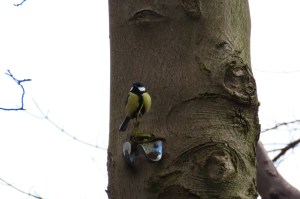
This great tit’s nesting in a hollow tree and that’s often their favoured kind of site, though they’ll use nest boxes.
During the nesting season great tits feed mostly on insects and larvae, which are rich in protein and help their babies to grow. But often through winter, when insects are scarce, great tits and other tits will feed on fruit and seeds and they are very glad to be fed by humans. Here is more info if you want to learn more: http://voice.gardenbird.co.uk/all-about-the-great-tit/
3 Bird song
A great tit has some loud, varied distinctive calls, one of which I think sounds like a squeaky swing: https: https://www.youtube.com/watch?v=gdYSB4Z_G0Y
Robin
The song
When you listen to the robin in this video, there are so many other birds singing it might be hard to hear which one is the robin. Here’s a recording of one:
Vicious fighters – robins are one of our most territorial birds. I have seen two robins sparring to the death, while singing their beautiful song!
Here’s a wee robin song for you to sing:
Heralds of autumn – in the summer birds are busy with their young and don’t sing much. But in August robins begin singing again, and for me, their song is the first sign of autumn.
Here’s more info on robins: https://www.discoverwildlife.com/animal-facts/birds/facts-about-robins/
1 Bird clothes
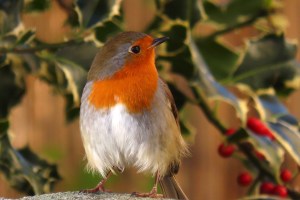
Robins whether male or female have bright orangey-red breast. Compared to other small birds, robins have quite long legs, but they’re often hidden by their leg tufts.
Feather design
All birds have several types of feathers for different purposes.
Flight feathers – have a hollow shaft surrounded by the vane, which is made of many hair-like filaments all zipped together.

Bristle feathers – help protect the eyes, beak and nostrils and act a bit like cat’s whiskers
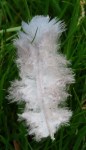
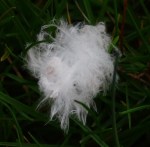
Downy feathers – help insulate the bird and keep it warm. The robin below has puffed out all its down to try and trap air like an insulating blanket against the cold

Find out more: http://www.garden-birds.co.uk/information/feathers.html
Feather colour
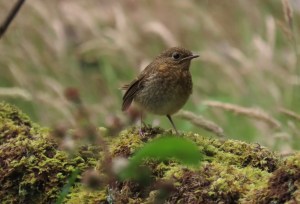
This is a young robin with a spotty tummy for the whole summer, which protects it from being attacked by the adult birds, who would not tolerate any other red tummies in their territory!
In the autumn time those feathers will moult – that means they will be pushed out and replaced by the new red feathers.
Many young birds, like this baby robin, look quite different from the parent bird until they moult. This can make identifying birds in the autumn time quite tricky.
All birds moult, even the adults. For small birds this can take 6 weeks, but for other big birds a full moult can take years – otherwise there would be an awful lot of baldy birds that could not fly 🙂
Moulting takes lots of energy and usually happens while food is still plentiful and before the cold weather sets in.
Interestingly, the insect-eating birds moult more efficiently than seed eaters as they absorb the keratin from the insects which is what feathers are made from.
Blackbird
In Scotland, this bird is kent as the mavis.
Bird Clothes
Camouflage

Can you see the beautiful orange ring around the blackbird’s eye? And he has a bright orange beak.
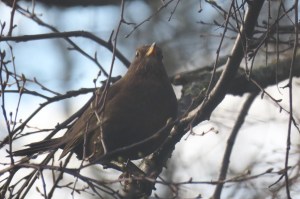
The male is black but the female is brown.
Here is a film of them both in my garden
Camouflage
In the bird world, protecting young is very important. Many female birds have soft, quiet colours to blend in with their surroundings so that egg/chick-eating birds, do not see the nest. And when baby birds grow their first set of feathers, some have soft muted colours too so that they can hide until they learn to fly.
Feathers follow on

Herring gull
Most gulls live by the sea and feed on seafood. But some have adapted and changed their behaviour in order to survive. Believe it or not they are an endangered species!
Male herring gulls are just slightly bigger than the females.
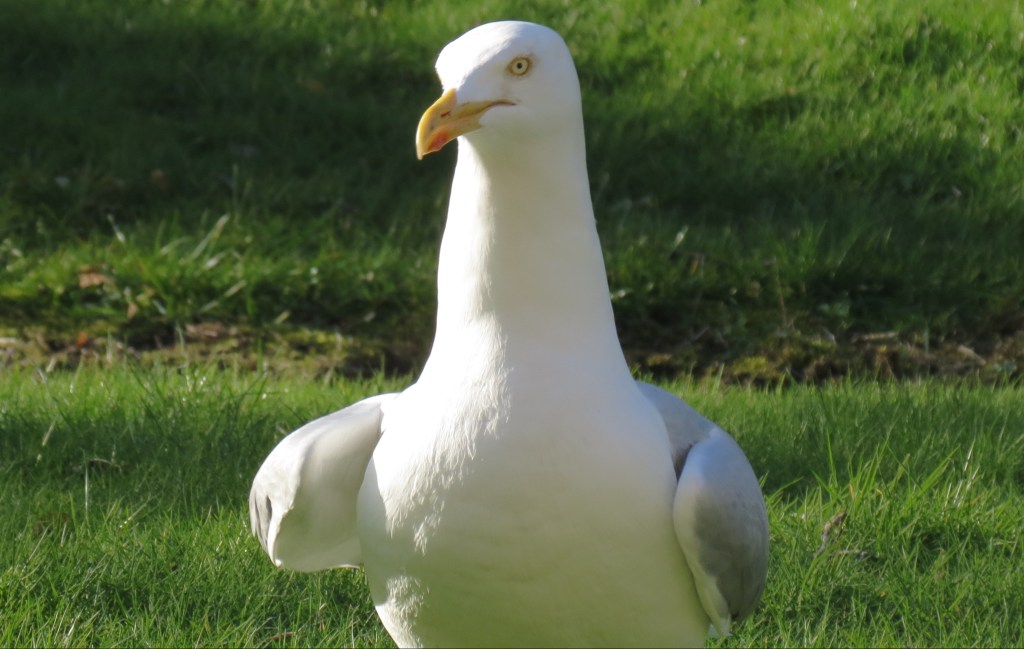
Bird gear
The beak – is good at tearing things apart, like fish. When the chicks hit the red spot with their beak, the parent opens their beak and the curdled munchies drop into the chick’s mouth 🙂
The wings – are very strong and gulls love to use them for soaring and wheeling in the sky. They need powerful wings to lift off the sea.
The feet – are designed for water – they are webbed…you’ll never see gulls landing in trees, coz they haven’t got claws.
Bird young
Herring gulls usually have 1 or 2 chicks. In urban areas gulls often nest on a roof. When the young start to move around, they often fall off. Some survive.
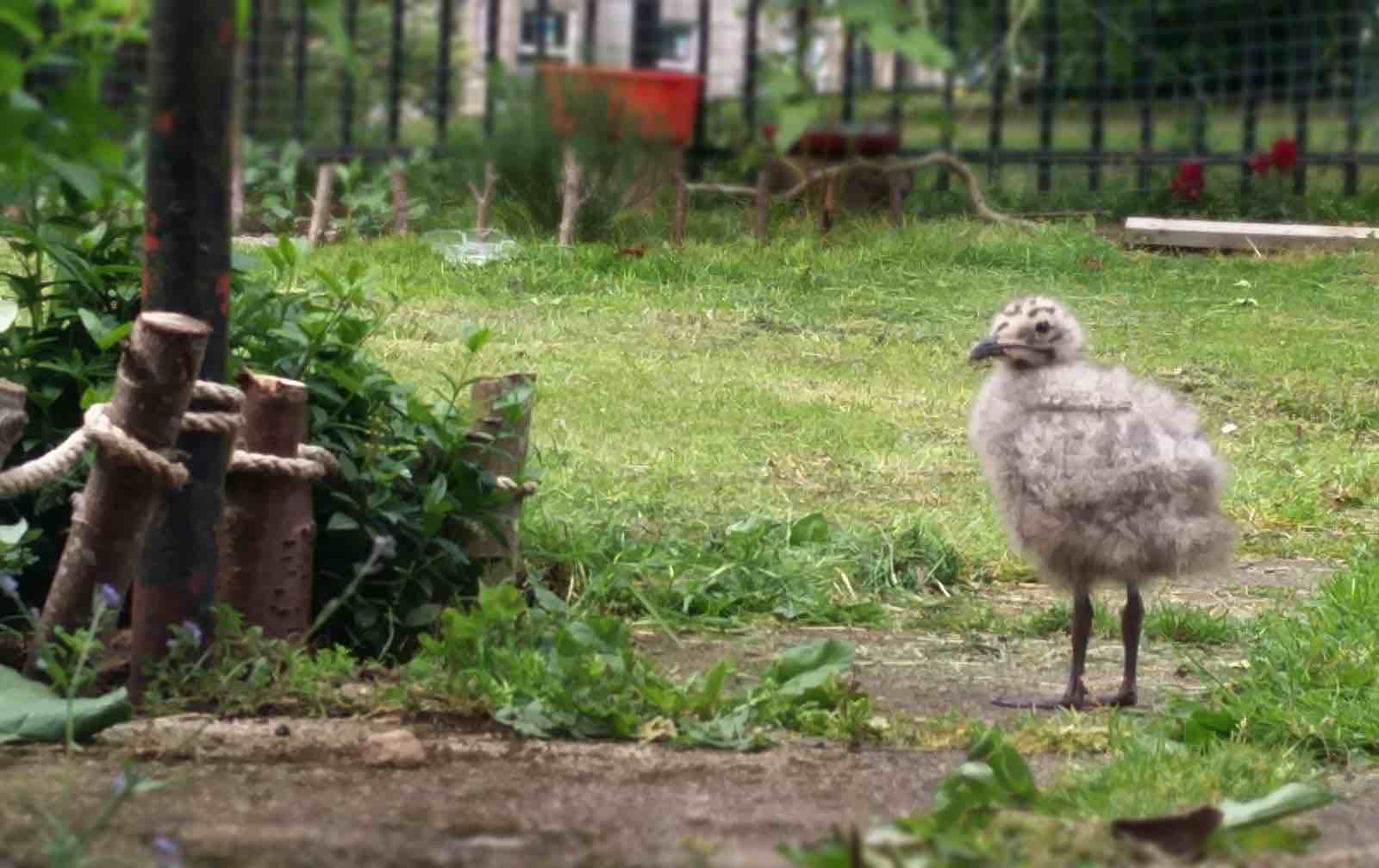
It takes the chicks a long time to learn to fly. Young, or immature herring gulls like this 1-year old, still expect food. Unfortunately because people feed these birds, they find it difficult to learn to properly feed themselves.
This video shows two gulls of different ages.
It takes 3 years for many gulls to mature into their adult feathers, or plumage.
For more info: https://www.rspb.org.uk/birds-and-wildlife/wildlife-guides/bird-a-z/herring-gull/
Wren
Bird Clothes and gear
The wee wren is very well camouflaged with its soft brown and fawn colours. The male and the female look the same.
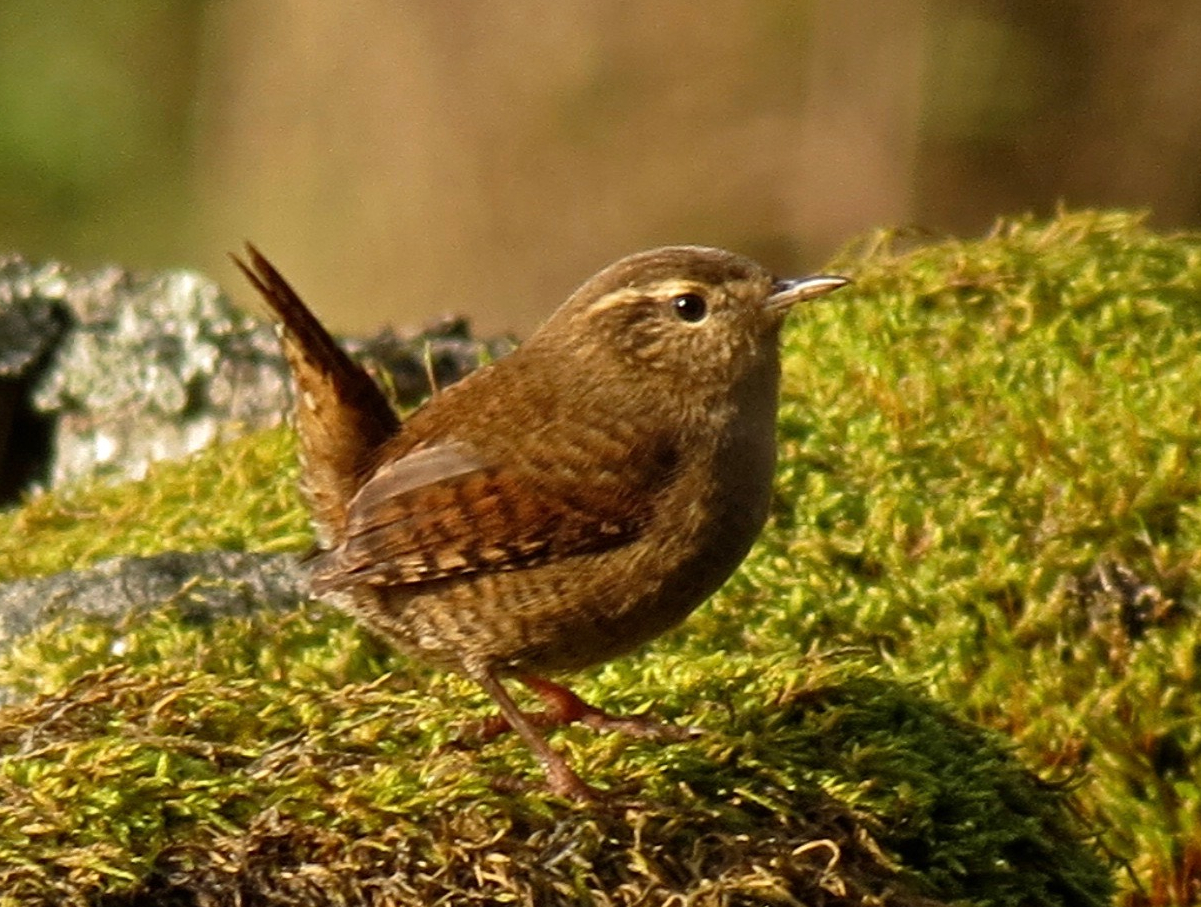
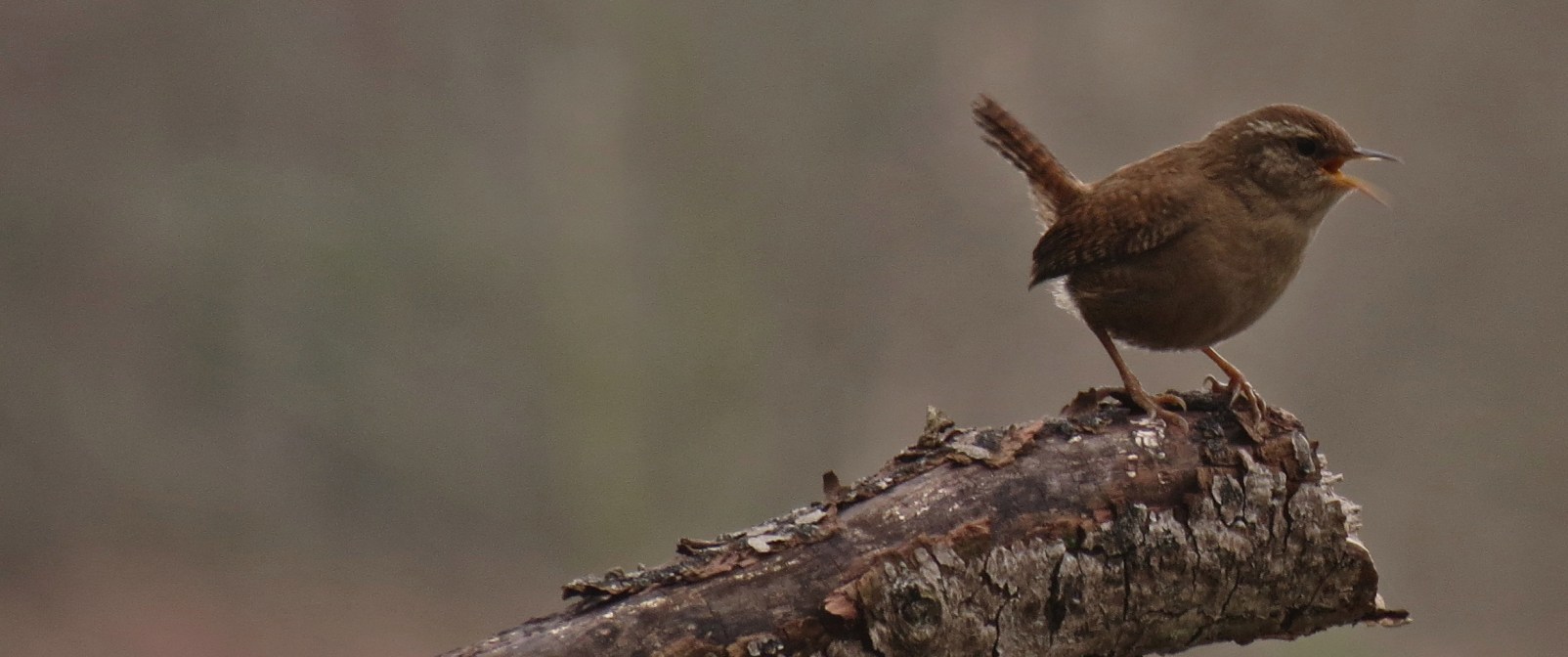
Beak – it has a long thin beak for probing crevices to find its food. It likes to eat insects and spiders – though apparently it can enjoy the odd tadpole or two as well!
Legs – it has long legs for its size – maybe so it can shout more effectively 🙂
Song
When you’re out, listen for a bird trilling loudly, and look for mouse-like movement in low lying vegetation…just watch… often the wren will fly up onto a ‘shouty’ prominent branch or log from which to boss everything in sight.
Size – wrens are very little. They’re the same weight as a £1 coin. Although territorial, wrens can only survive cold winters by snuggling up with other wrens – up to 60 birds have been recorded wintering in one nestbox! You’d think the bottom ones would get a wee bitty squidged…
Wrens’ body temperature can fall quite low so that they almost go into hibernation. This means they can conserve precious energy-fat cells and then, when the warmer weather comes, they wake up and go their separate ways.
While I was out walking today I heard 11 different wrens singing – as long as they can survive the harsh winters, wrens are one of the most successful breeding British birds.
Wren young
Wrens make a tiny, cozy globe-nest and lay 5-8 eggs. They are just 1.6 by 1.3cm in size.
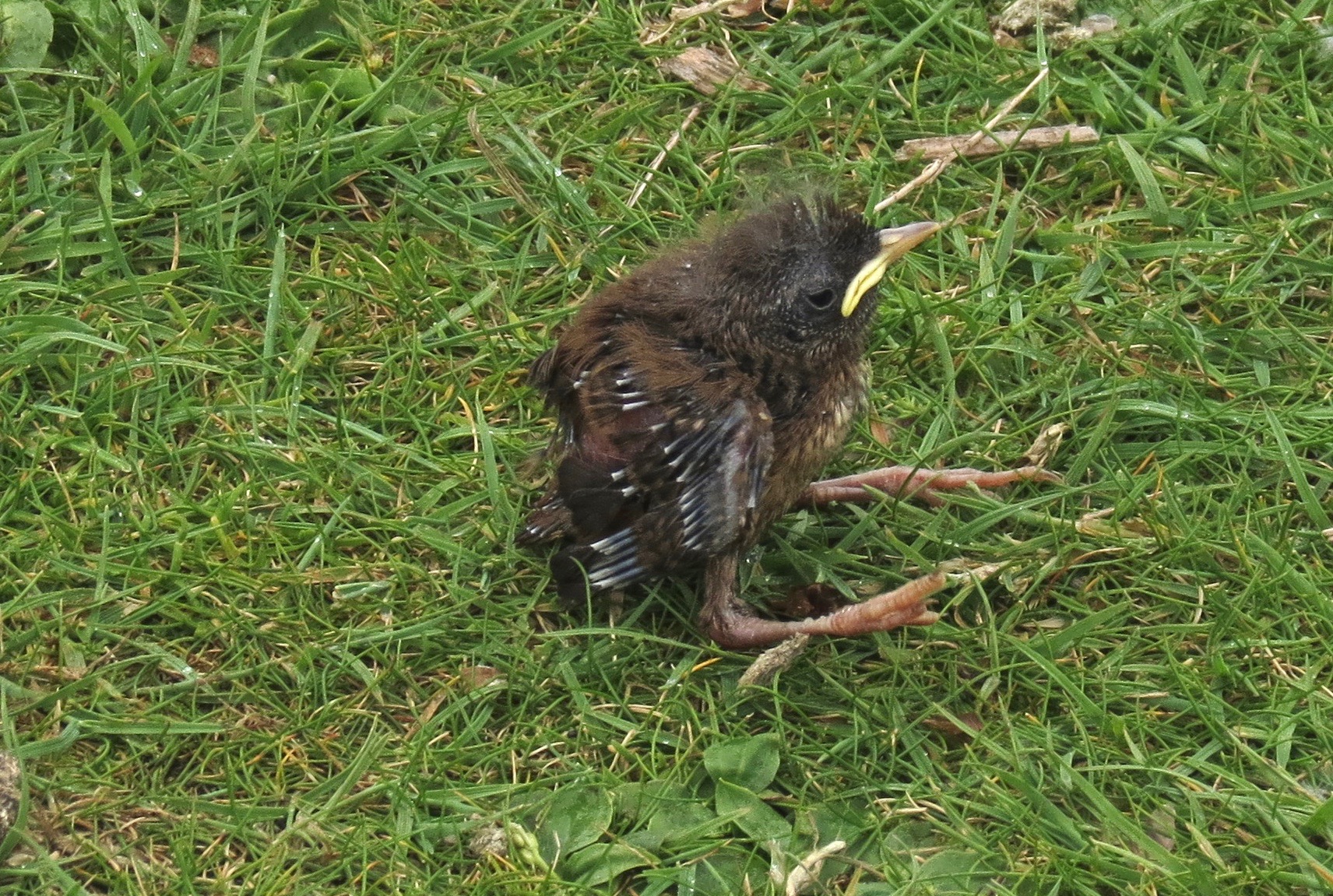 Would you recognise this as being a wren chick? I didn’t! Look at its long legs. It’s covered in fluffy down and only beginning to develop flight feathers.
Chaffinch
Bird gear
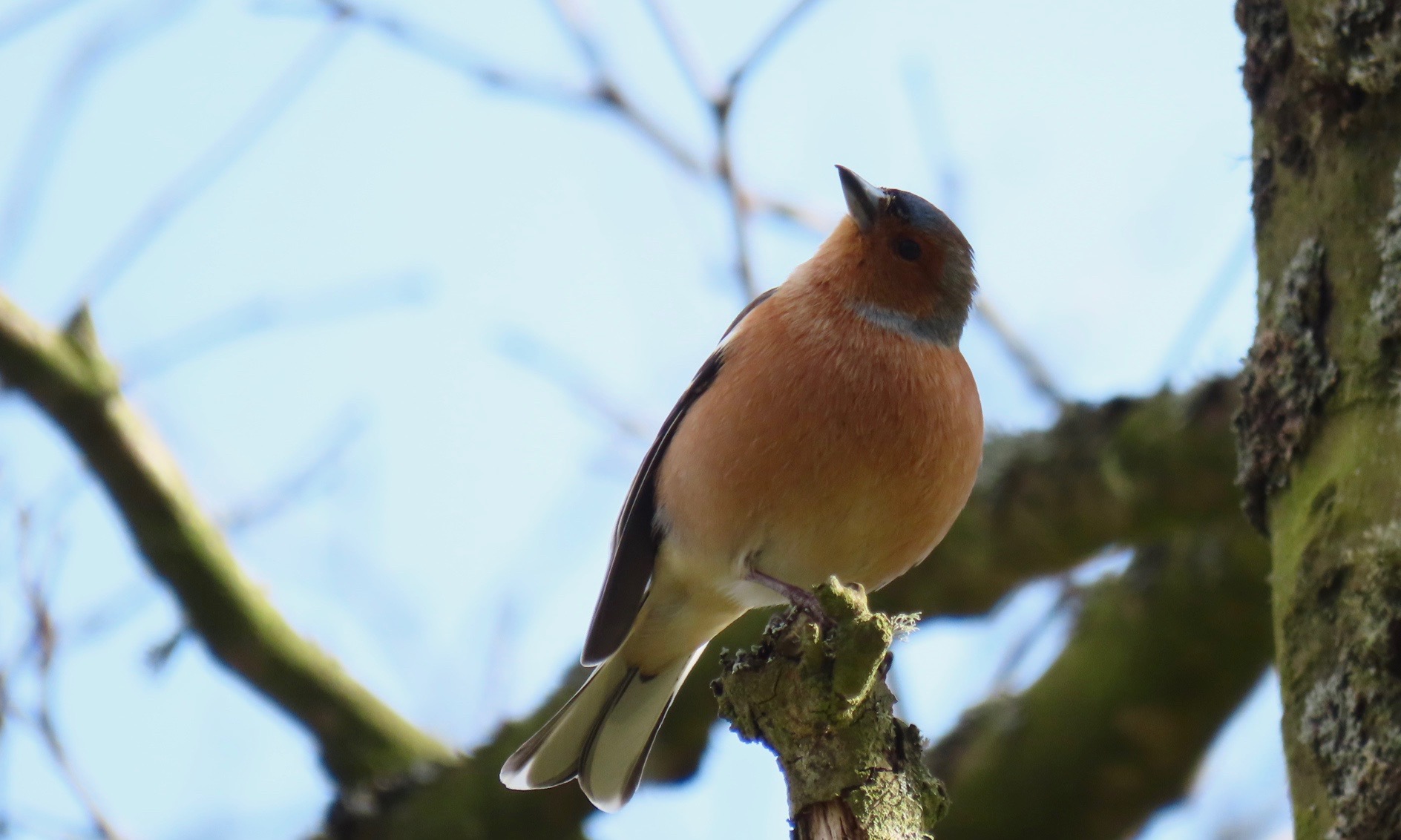
Beaks – the chaffinch beak is broad so it can eat seeds as well as insects, including caterpillars.
Some finches specialise in eating flower buds.
Feathers – the male chaffinch has a beautiful pink tummy and cheeks, the female is less colourful but still lovely.

Bird song
A chaffinch song is a simple decrescendo: https://www.youtube.com/watch?v=kyL5hrXhhj
The chaffinch also has a call, often referred to as ‘pink!’ So if you can remember the colour of the male’s tummy, maybe that will help you remember the bird!
Here is a video of the male ‘pink-ing’
Goldfinch
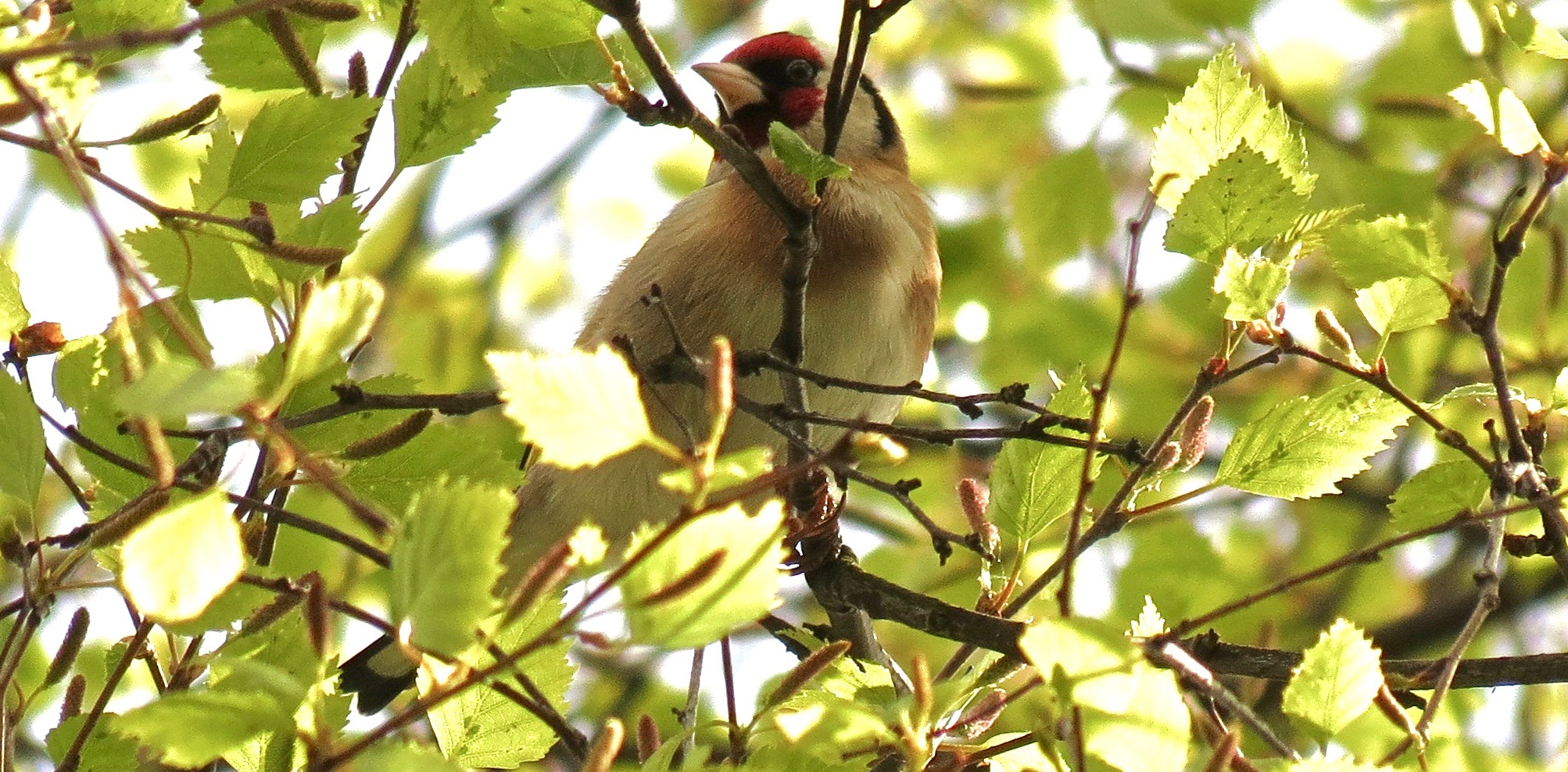
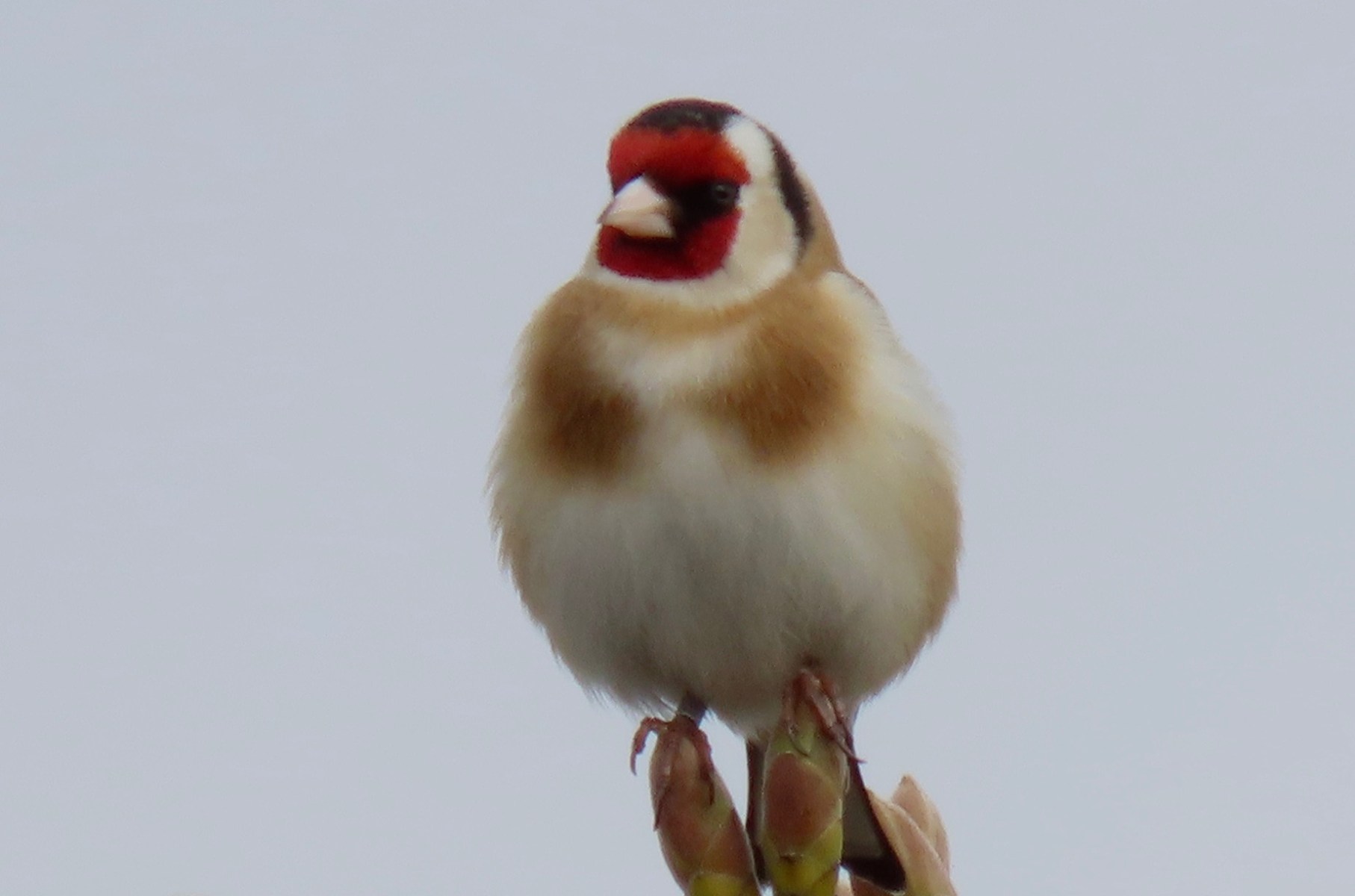
The male and female look similar, though the male has a slightly longer beak.
Bird gear and behaviour
Beaks – Goldfinches have great beaks for eating buds and seeds. They love nyjer seed from a bird feeder, they will also eat insects. But their favoured food in the autumn is eating flower seeds like this:
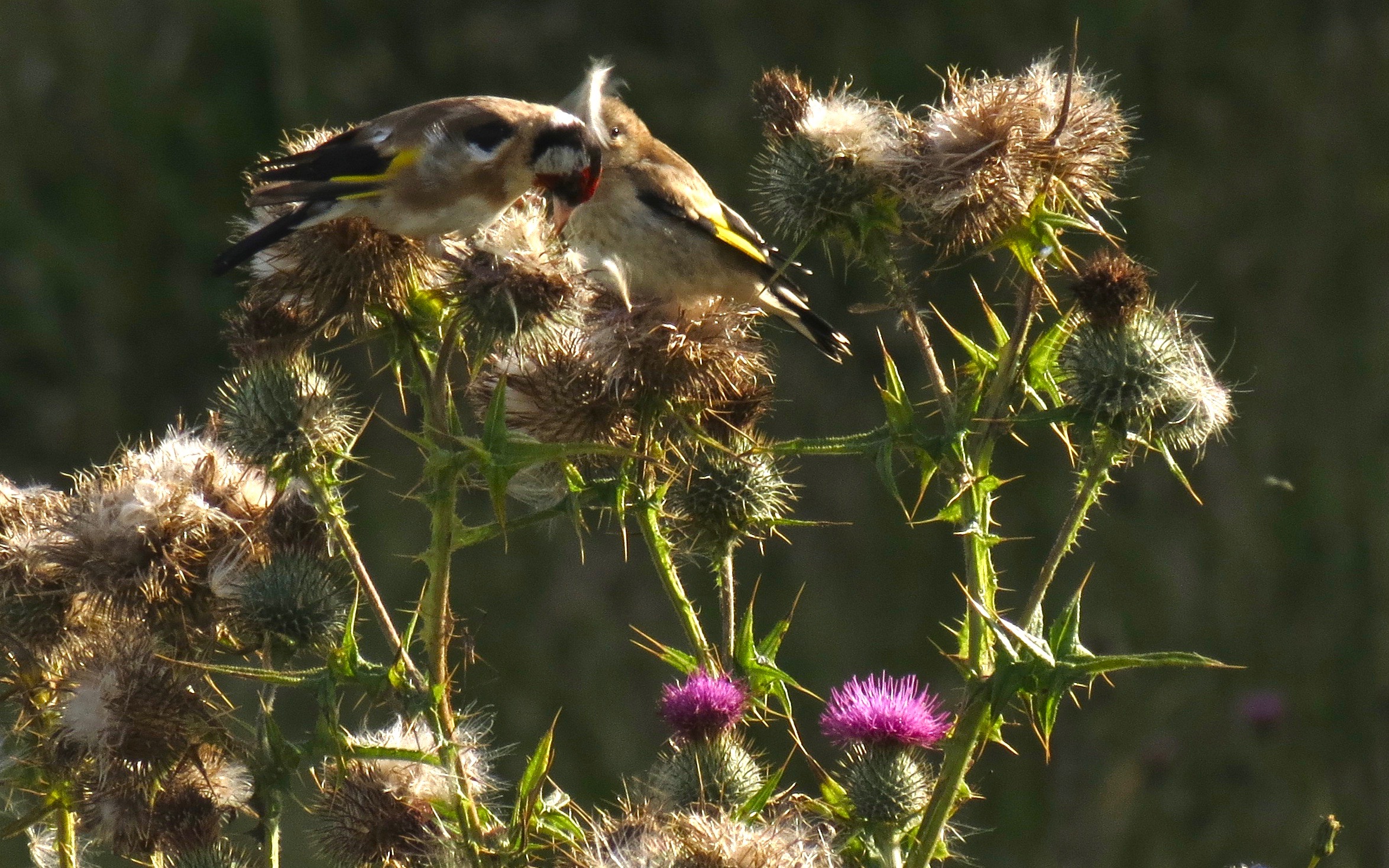
Many years ago a goldfinch was known as a thistle finch 🙂
Feathers – Goldfinches have gold feathers on their wings and a lovely red face but the young take a while to develop the colour. See the one below.
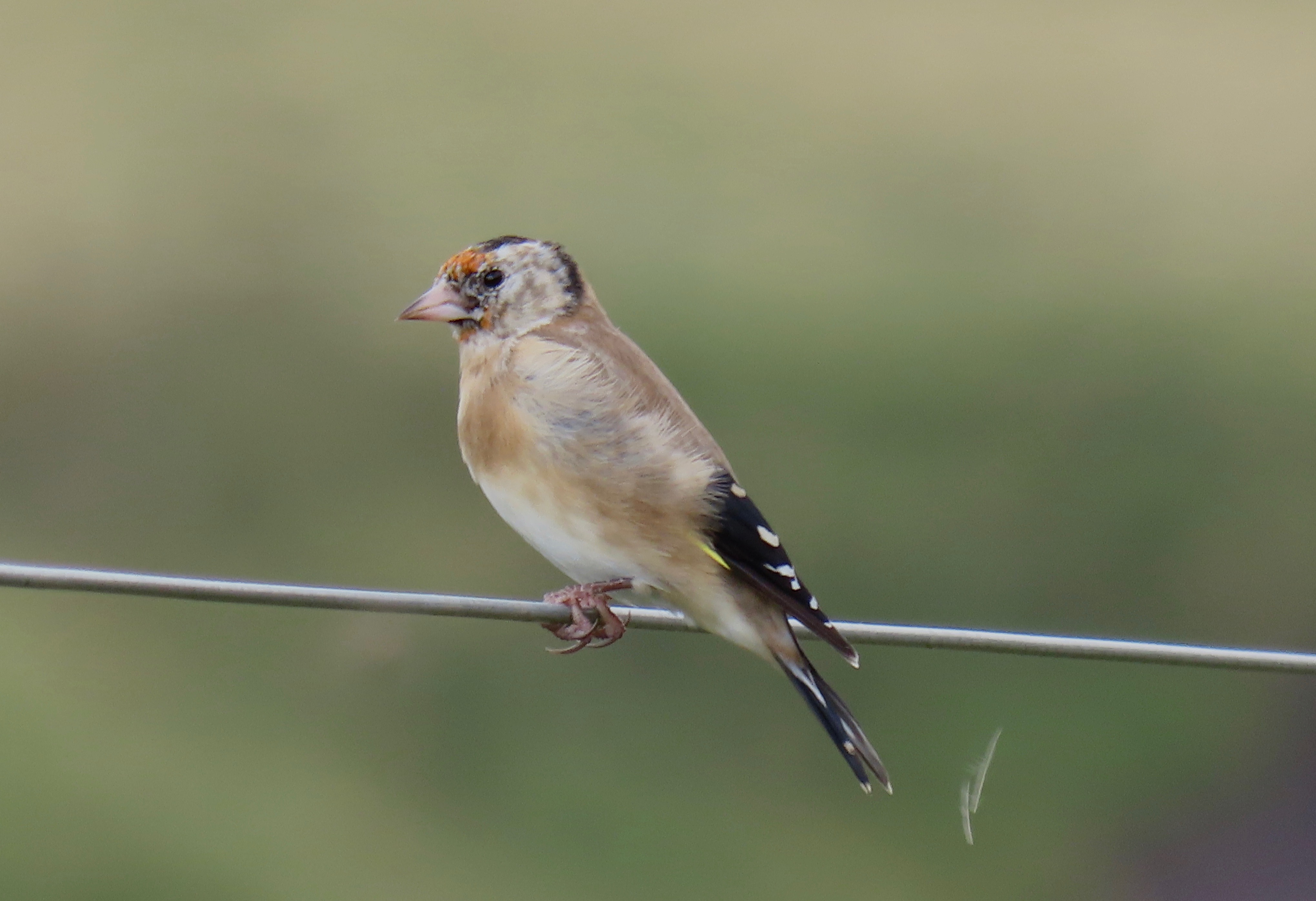
Bird call – goldfinches always sound so excited! Often they chatter away in the trees.
Flight – even their flight is bouncy! And they often chatter as they fly.
Safety in numbers – They are very sociable and as soon as nesting season is finished they gang up, sometimes in huge flocks and you will hear them ‘whickering away’ to each other.
If you are ever oot of toon in the winter and see a flock of birds fly up from a field it might well be a mix of finches.
I have noticed more and more goldfinches seem to stay in town over winter. Maybe there is more food available to them from bird feeders.
Fact – Goldfinches used to be caught in big numbers and caged, along with many other songbirds. Today there are still people who like to keep an aviary of birds, and goldfinches are one of the popular birds to be kept in captivity.
Carrion crow

Bird gear and behaviour
The male and female look alike, though the male is slightly larger.
Crows can be seen in small groups, and sometimes nest together.
Eating habits – the crow will eat anything it can get its beak into, and will relish anything that has died – they are great scaffies, especially for roadkill.
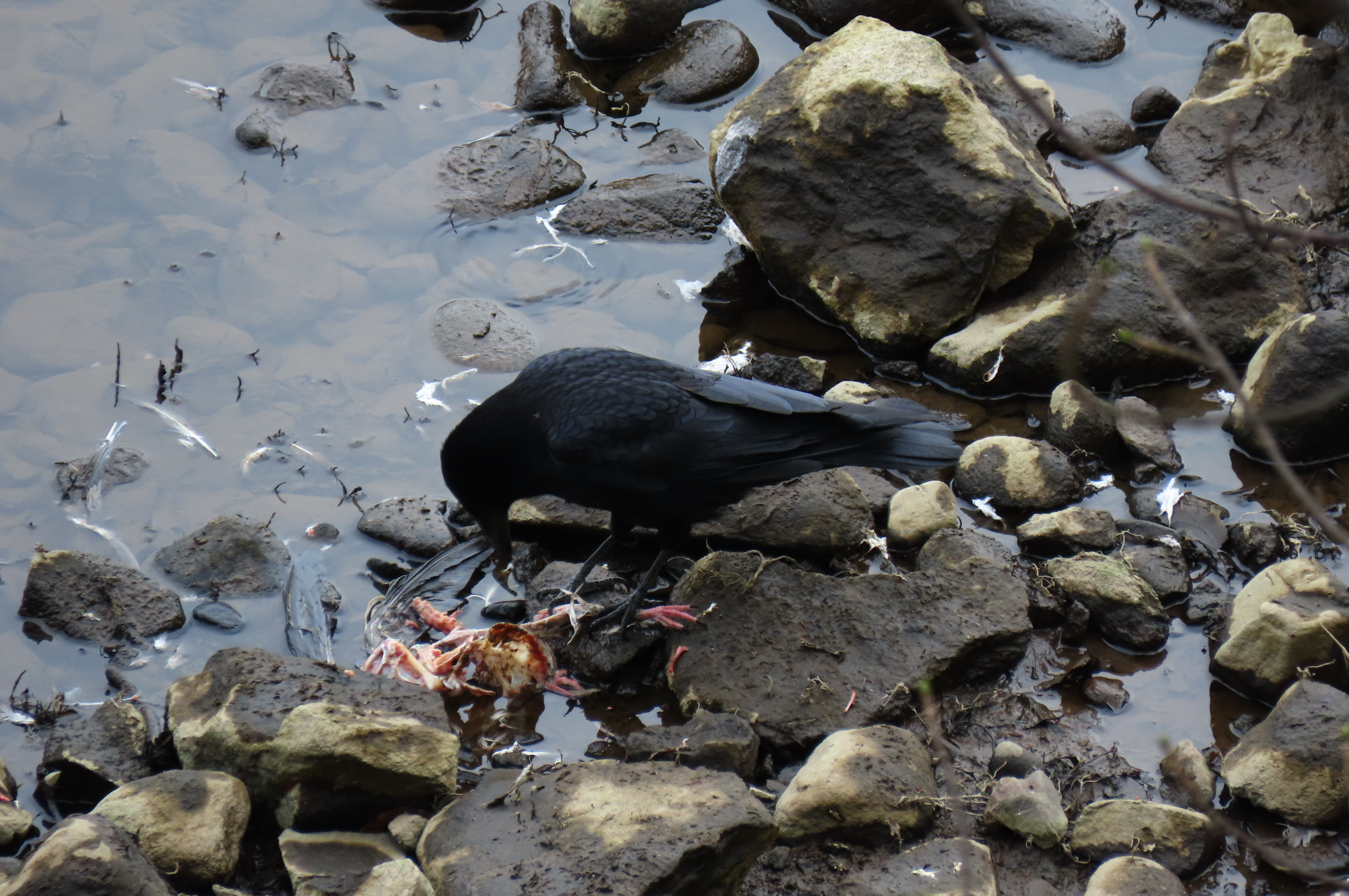
Intelligent – I have seen a crow take chicks from a blackbird nest and once a friend watched a crow calculate how to catch a fast little bird while it exited its nest…it was successful.
In my garden, the crows were the first one to find the water bowl I put out, and each day this crow would bring bread and dump it in the water to soften it.
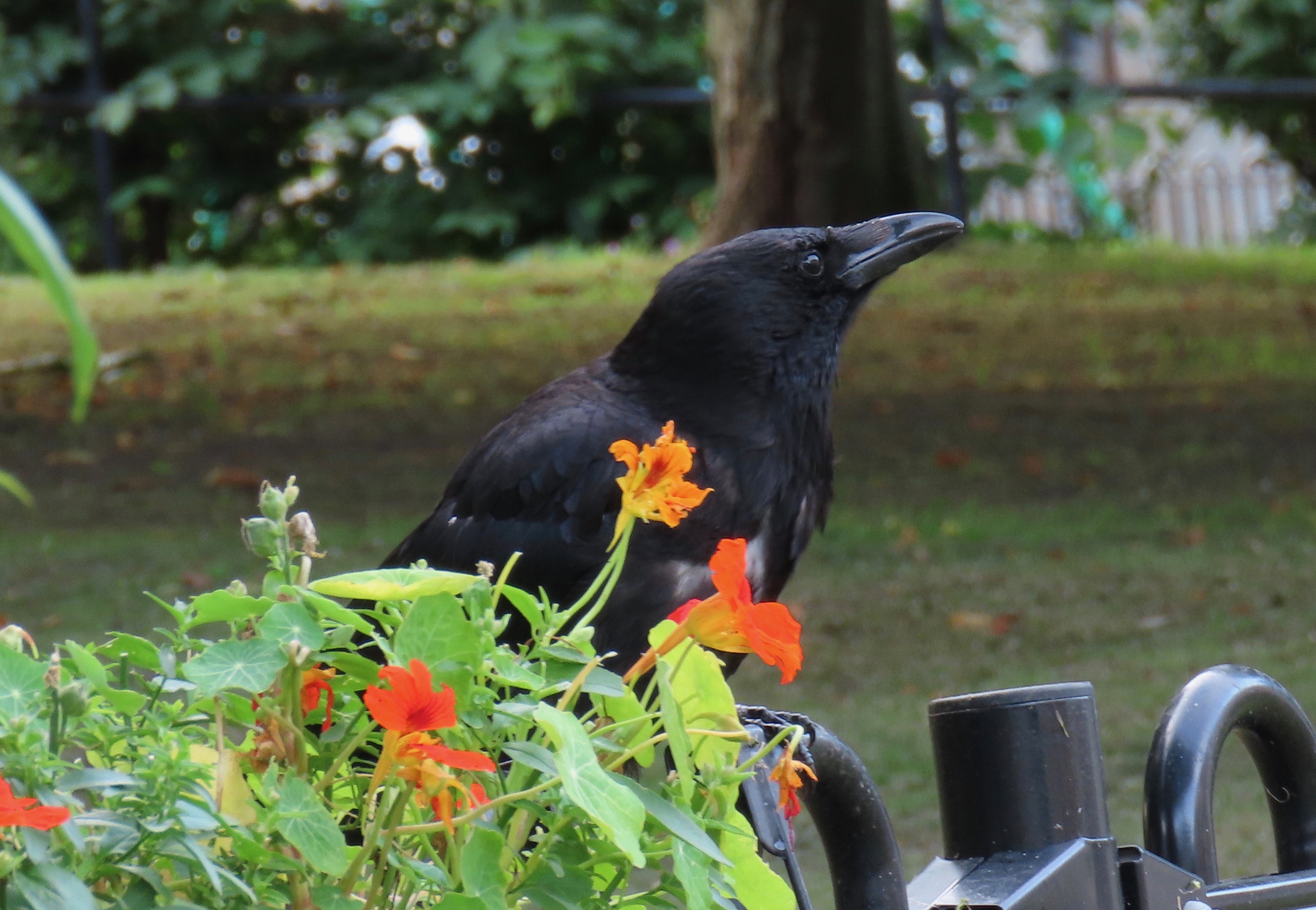
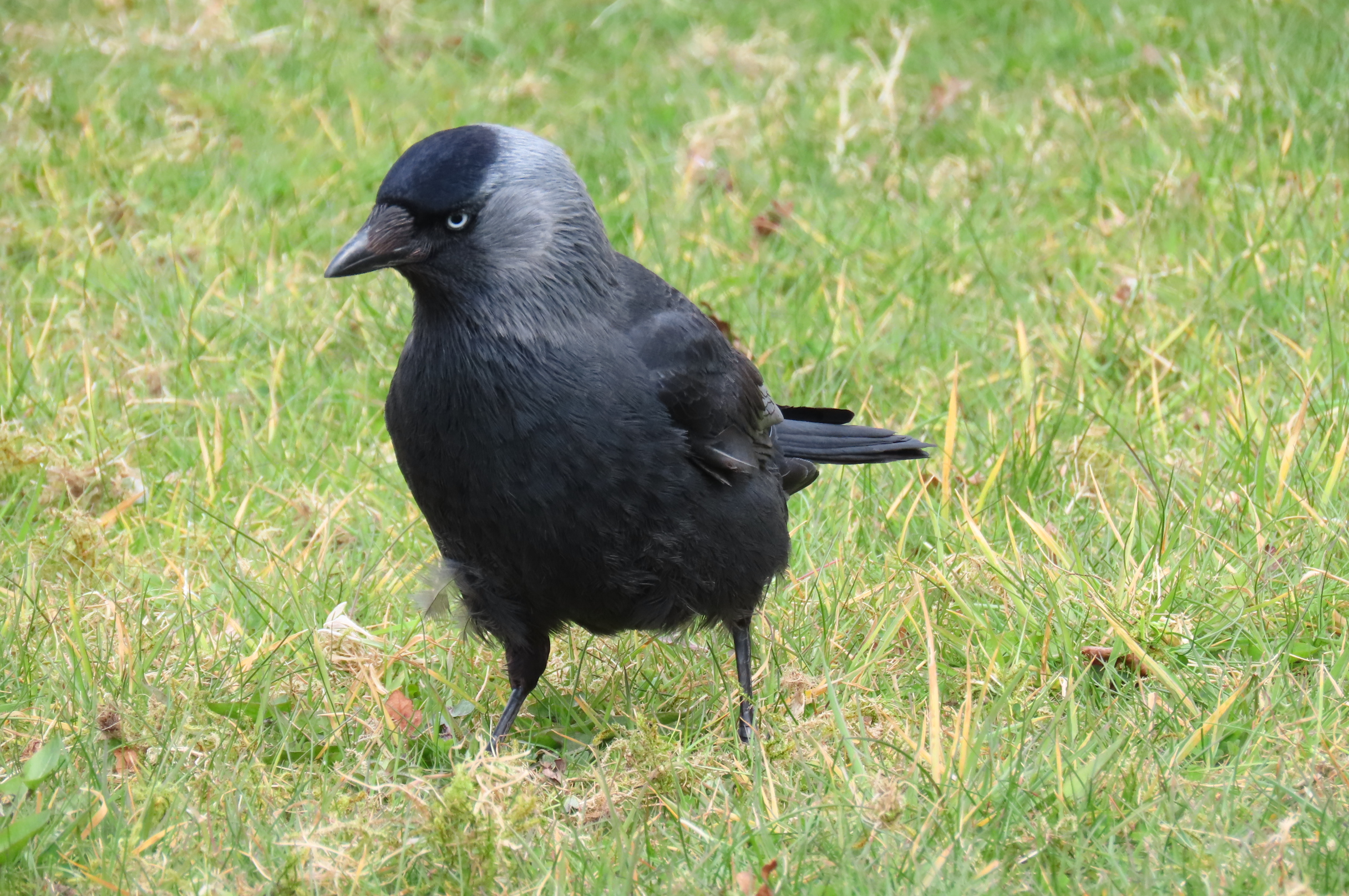
Other birds that are part of the crow family.
Jackdaw
Magpie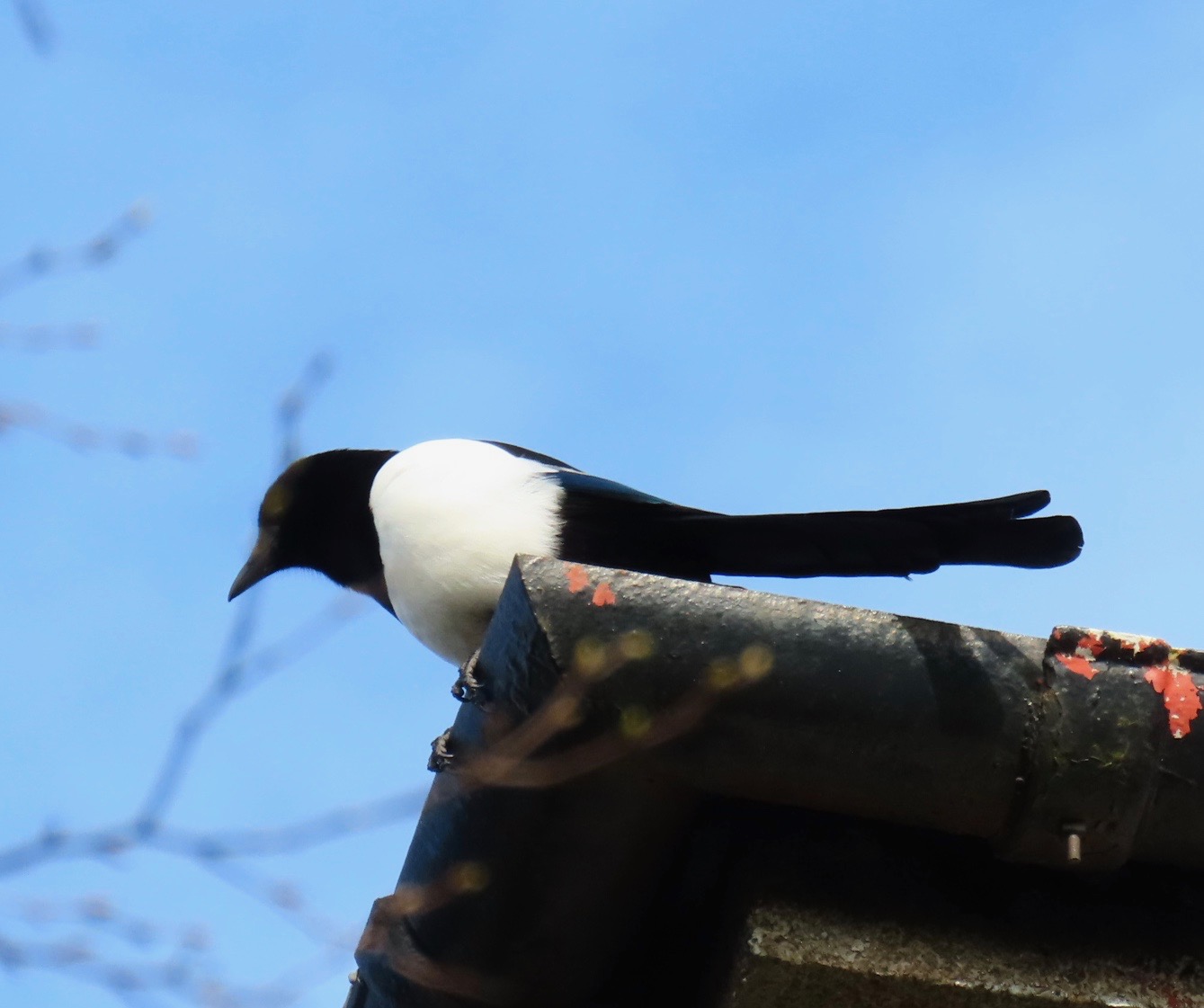
Rook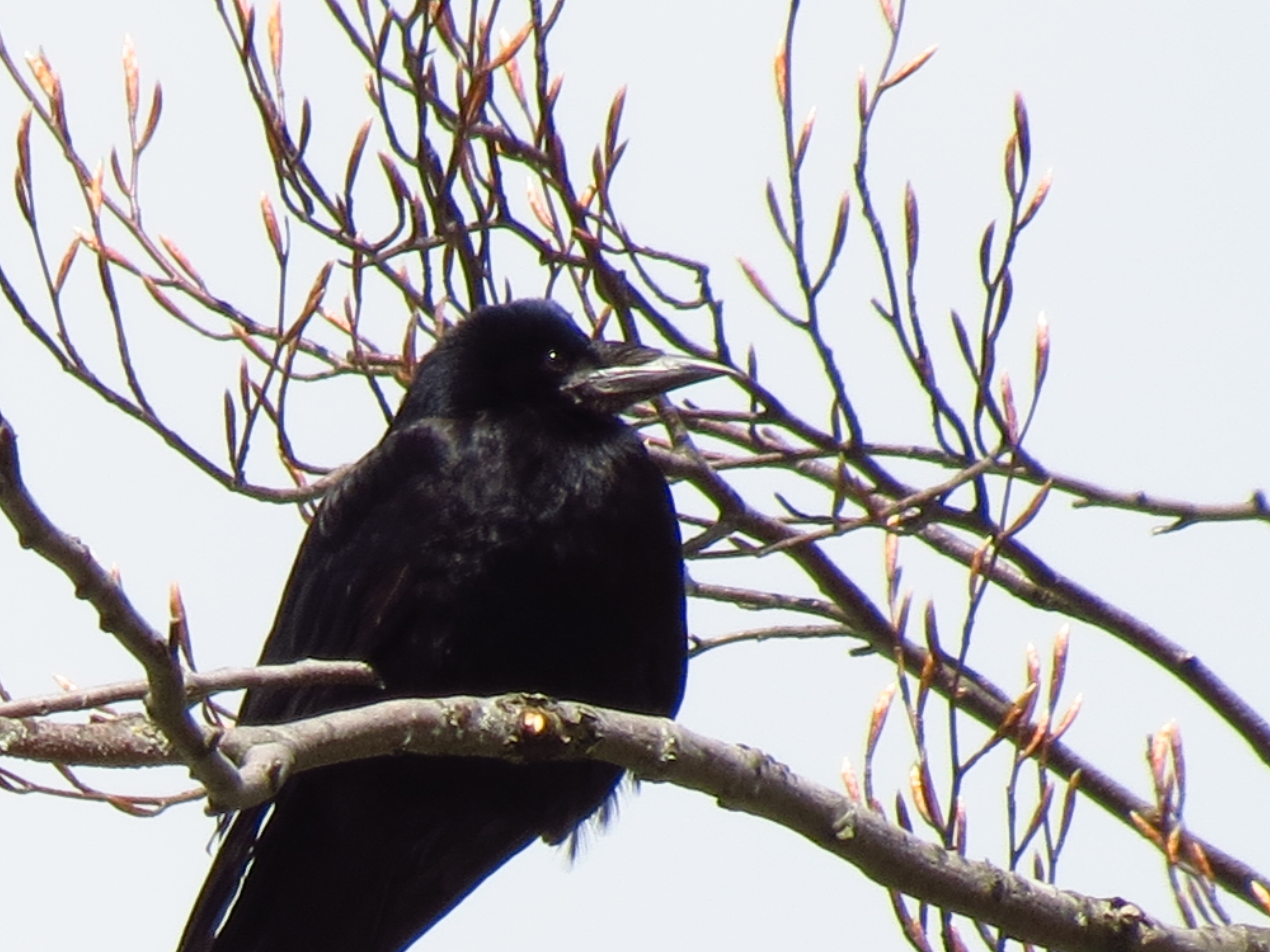
Oystercatcher
This bird can be seen in town, the countryside or if you live near the sea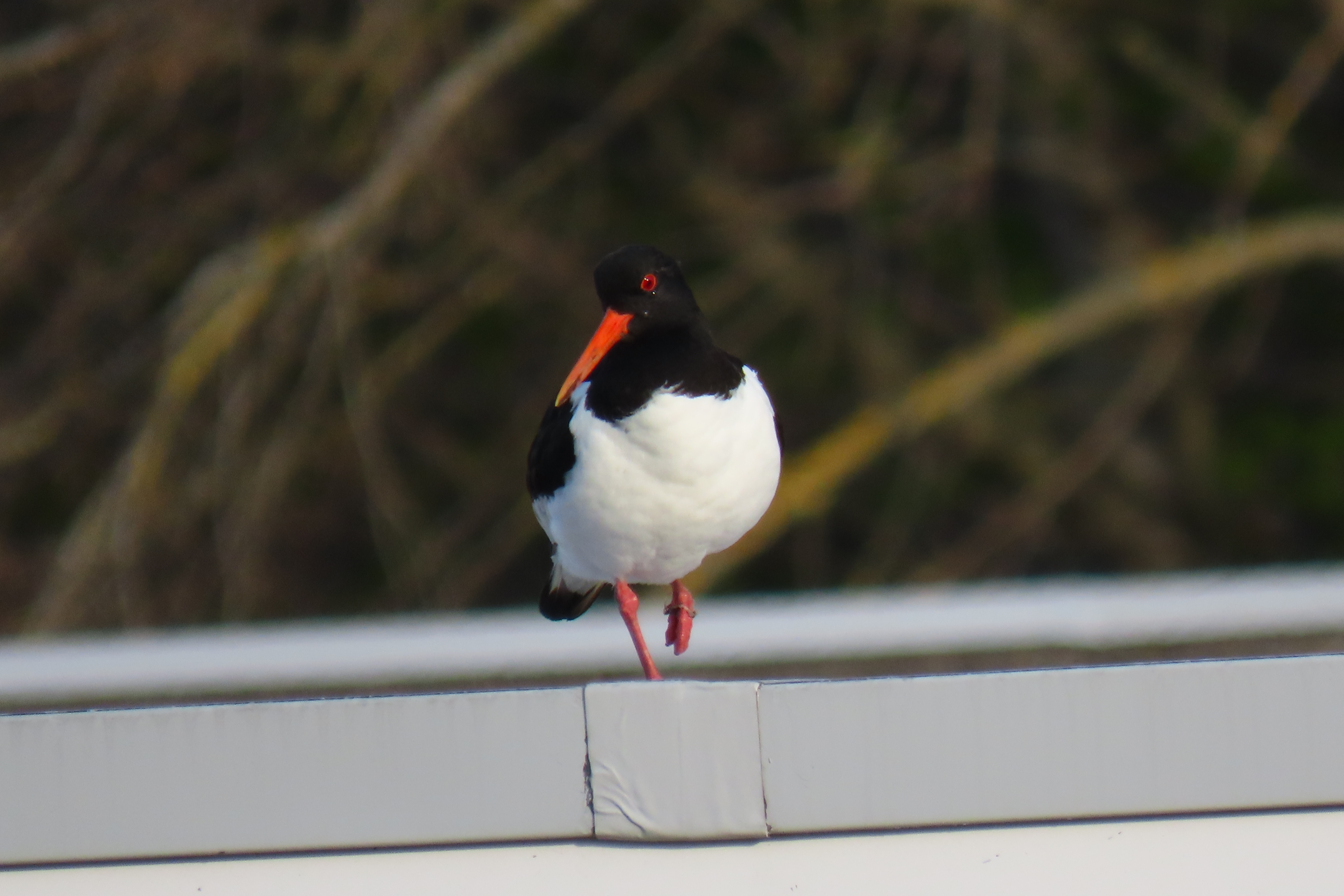
Bird clothes
The oystercatcher’s beak is like a drill, prizing open shells or digging into the grass to find insects and worms.
This bird has brightly coloured legs, beak and eye. With its beautiful black and white feathers I always think it looks like it has a dinner suit on!
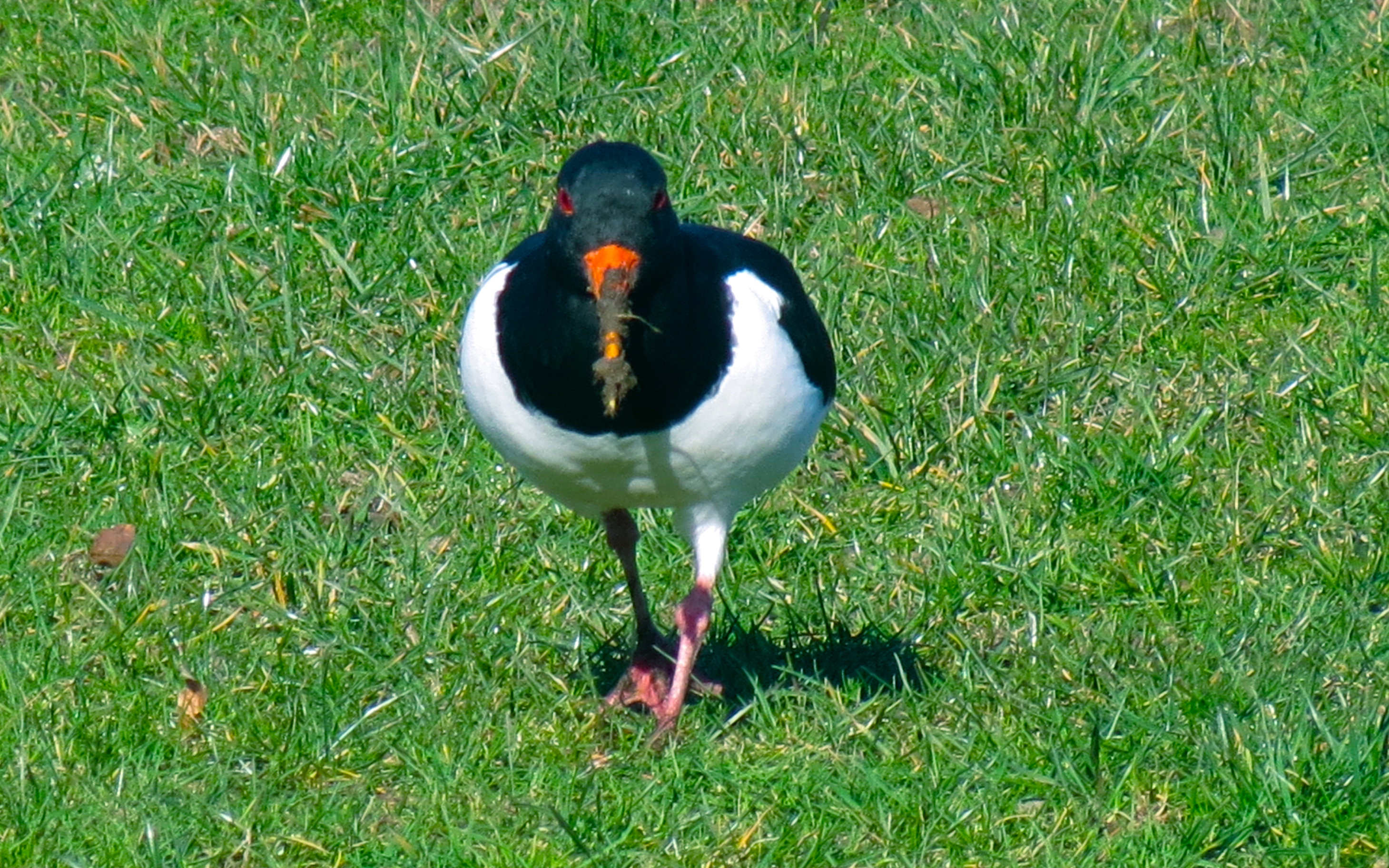
The male and female look similar, although the male is very slightly bigger.
Bird behaviour
Moving house – in winter most oystercatchers move to coastal areas to feed.
In February, they return to their nesting areas, announcing their arrival with their sharp pipey call -‘Peep, peep, peep! They look like the bird version of the red arrows as they fly in sync with each other.
In the video you can see they are doing a funny dance while they call, this is what oystercatchers do when they are pairing up for breeding.
Nesting – oystercatchers often nest on the ground – I remember finding one nest in a castle carpark 🙂 At one school in Aberdeen they nested in a raised bed!
But in town oystercatchers mostly look for flat roofs to nest on, where they can keep a good look out for predators. And oh michty! they let everyone know if danger is near.
Starling

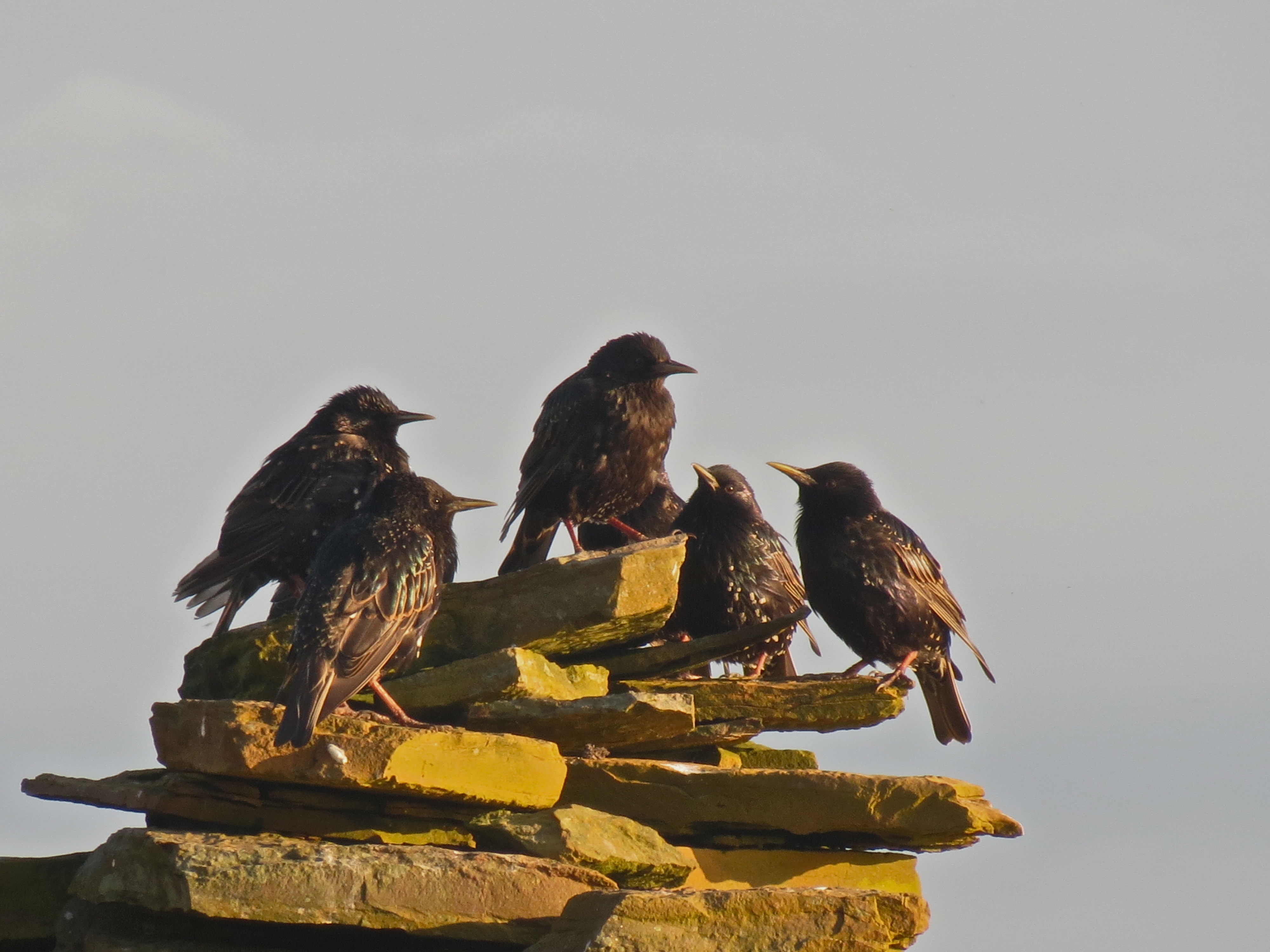
Clothes
The male and female look similar, but the young are pale, like this:
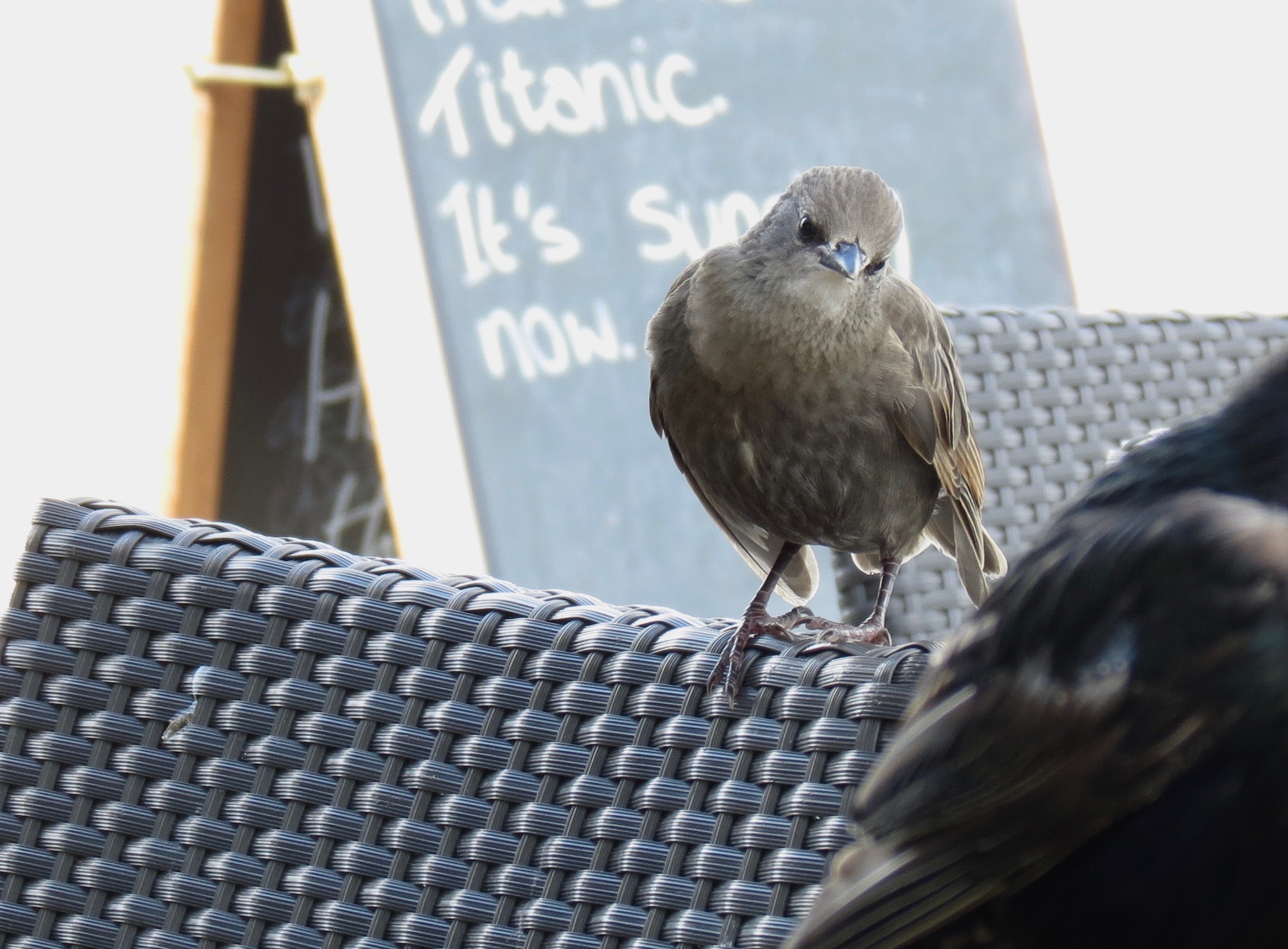
and gradually the coloured feathers come in like these scruffy ones below 🙂
Behaviour
Eating – they like insects, but starlings will find food anywhere!

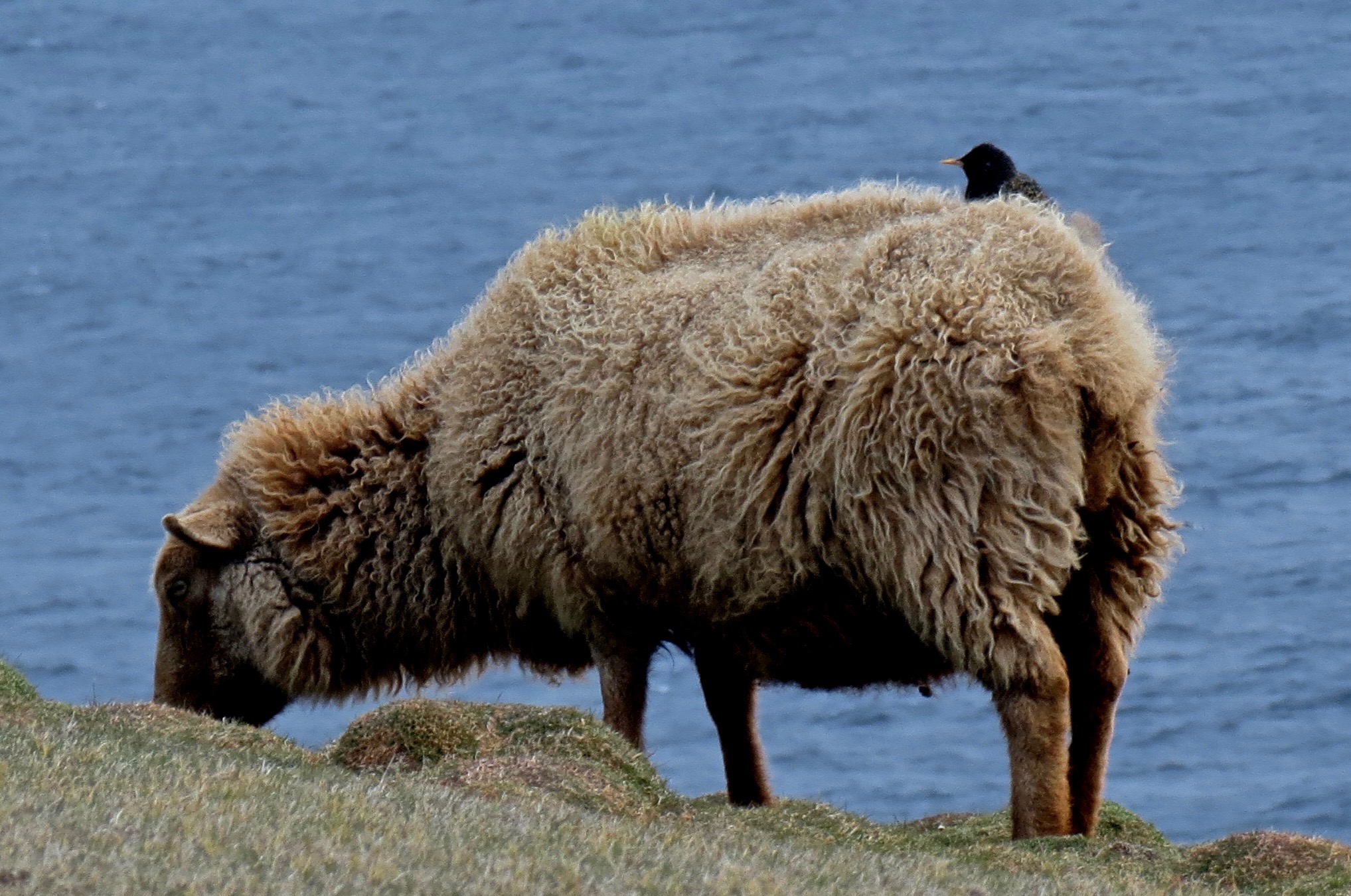
Community-minded – most of the year starlings like to be in a group. In Spring they nest and raise their young and then group together again.
During the winter they often rise in the air in huge flocks and move beautifully in sync with one another. This is called a murmuration.

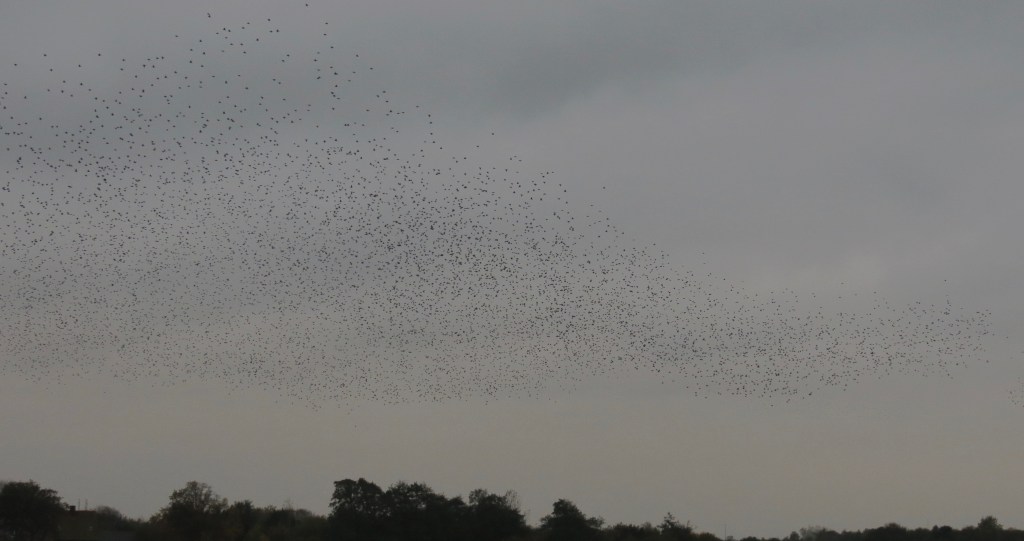
Here’s a film of a murmuration: https://www.youtube.com/watch?v=8jiSL08REoM
Singing – starlings have an interesting song! These birds are renowned for copying things from gulls, to mobile phones to lawn mowers! Listen below:
 silverhaar